

Isothermal chemistry, engineered for the point of care.
AscellaOne is built on single-temperature isothermal nucleic acid amplification originating in the laboratory of Prof. Eric Kool at Stanford University, combined with reagent formulation and device engineering developed in-house.
Isothermal amplification
Nucleic acids are amplified at a single reaction temperature, with no thermal cycling. This makes the chemistry well suited to compact, low-power instruments.
Freeze-dried reagent beads
Reagents are lyophilized inside the cartridge. Our formulation work aims at room-temperature storage and distribution without a cold chain.
Simplified sample preparation
We are developing reaction chemistry that reduces or removes nucleic acid extraction steps. Applicability to each sample type is being evaluated in analytical studies.
Multiplex cartridge
The cartridge is designed to run multiple targets together with an internal control, read by an optical module in the handheld reader.
Proprietary primer design
A thermodynamics-based algorithm generates and ranks primer candidates, shortening assay design cycles.
Connected reader
The reader connects to a smartphone or tablet app over Bluetooth, which guides operation and shows measurement progress.
Research across multiple sample types.
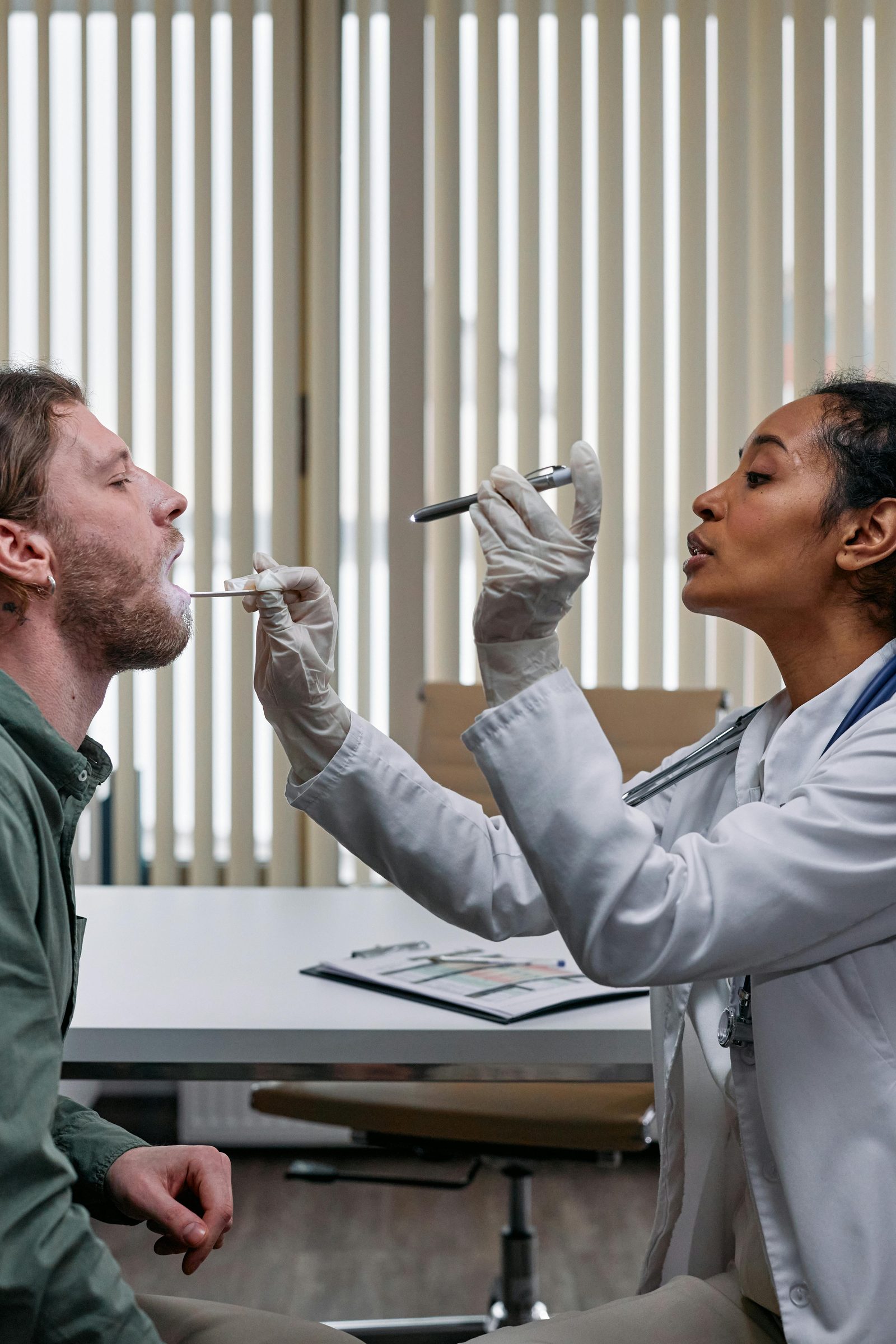
We are researching reaction chemistry with simplified sample preparation for saliva, nasal swabs, whole blood and stool. Performance for each sample type will be established in analytical and clinical performance studies.
A new target reaches non-clinical proof of concept in a short time.
Because targets can be added on the same platform, we are exploring applications across infectious disease, antimicrobial resistance and veterinary diagnostics.
Marker selection
Define the target gene region from known species or resistance markers.
Primer design
Our thermodynamics-based algorithm generates candidates in a few hours.
Screening & optimization
Around ten candidates are synthesized and evaluated; the top three are tuned.
Formulation
Freeze-dried beads and resuspension buffer are developed and verified.

Amplification confirmed in internal research.
Results from internal, research-stage experiments. They do not indicate diagnostic performance. Not an exhaustive list.
Building the next generation of point-of-care testing, together.
We are seeking development, manufacturing and distribution partners for human IVD and veterinary applications.